Understanding Bills of Lading (B/L)
One of the most important documents in international trade.
The Bill of Lading is one of the most important documents in international trade. It serves as a receipt, evidence of contract and, in many cases, a document of title.
We verify African suppliers on the ground — legal identity, ownership, capacity and site visits — before you transfer any money. supplier verification in Africa.
One of the Most Important Documents in International Trade
Every international shipment involves documentation, but few documents are as important as the Bill of Lading (B/L).
Whether goods are being shipped from Africa to Scandinavia or between any other international markets, the Bill of Lading plays a central role in the movement of cargo.
Importers, exporters, freight forwarders, banks and shipping companies all rely on this document to manage the transportation of goods.
Understanding what a Bill of Lading is—and what it is not—helps companies avoid unnecessary misunderstandings and costly delays.
What Is a Bill of Lading?
A Bill of Lading is a transport document issued by, or on behalf of, the carrier after cargo has been received for shipment or loaded on board a vessel, depending on the type of B/L issued.
Traditionally, it serves three primary functions:
- It acts as a receipt confirming that the carrier has received the goods.
- It provides evidence of the contract of carriage between the shipper and the carrier.
- In many cases, it also functions as a document of title, allowing rights to the goods to be transferred according to the applicable form of Bill of Lading.
Understanding these different functions is essential when negotiating international transactions.
Why Is It So Important?
Without the appropriate transport documents, cargo may not be released at the destination.
The Bill of Lading is frequently required by:
- Shipping lines.
- Freight forwarders.
- Customs authorities.
- Banks.
- Insurance companies.
- Importers.
- Exporters.
It provides an agreed record of what has been shipped, by whom and under which transport arrangement.
Information Typically Included
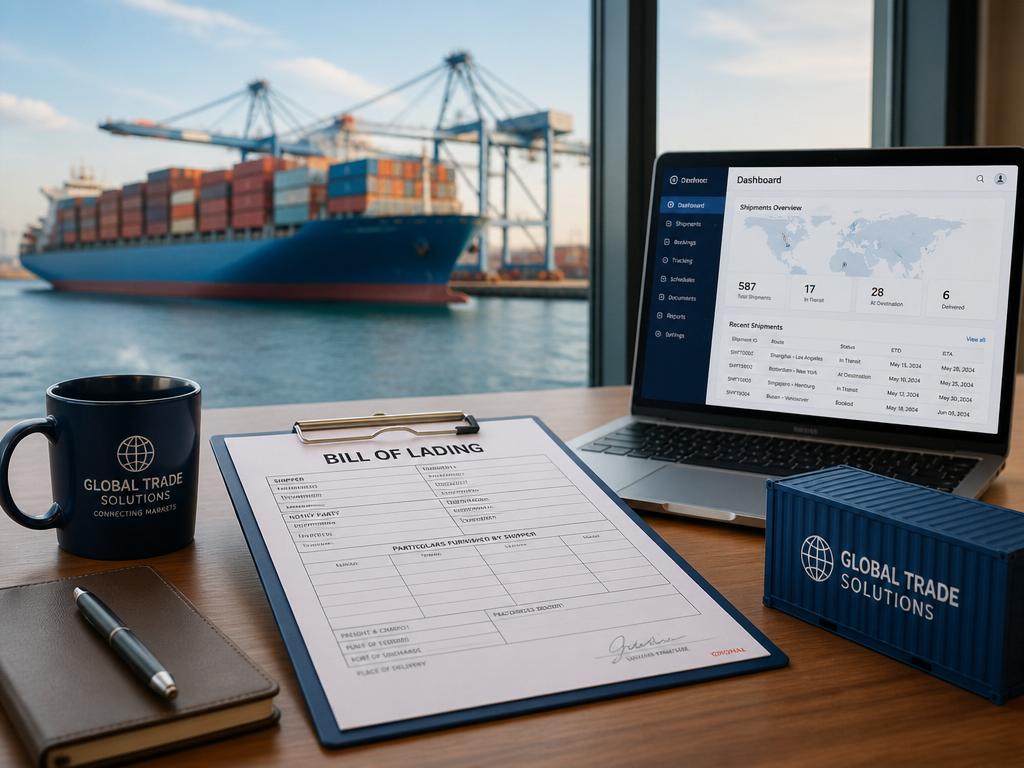
Although layouts vary between carriers, a Bill of Lading commonly contains:
- Shipper.
- Consignee.
- Notify Party.
- Vessel name (for sea freight).
- Port of loading.
- Port of discharge.
- Description of the goods.
- Number of packages.
- Gross weight.
- Container numbers (if applicable).
- Freight terms.
- Date of issue.
Accuracy is important because inconsistencies between transport documents and commercial documents can create delays or complications, particularly where documentary payment methods are used.
Types of Bills of Lading
Several forms of Bills of Lading are used in international trade.
The appropriate document depends on the shipment and the commercial agreement.
Common examples include:
Original Bill of Lading
An original negotiable Bill of Lading may allow control of the cargo to be transferred according to its terms and is still widely used in many international transactions.
Sea Waybill
A Sea Waybill is generally not a document of title.
It is commonly used when ownership is not expected to change during transport and allows cargo to be released to the named consignee without presentation of an original negotiable Bill of Lading.
For established trading partners, this may simplify the delivery process.
House Bill of Lading
A House Bill of Lading is normally issued by a freight forwarder or non-vessel operating common carrier (NVOCC).
It reflects the agreement between the freight forwarder and its customer.
Master Bill of Lading
The Master Bill of Lading is issued by the shipping line to the freight forwarder or contracting carrier.
It governs the transport agreement between those parties.
Clean and Claused Bills of Lading
A Bill of Lading may also indicate the apparent condition of the cargo when received by the carrier.
A Clean Bill of Lading indicates that no apparent damage or irregularities were noted by the carrier regarding the goods or packaging at the time of receipt or loading.
If visible damage or irregularities are noted, the carrier may issue a Claused Bill of Lading describing those observations.
Where documentary credits are involved, buyers and banks may pay close attention to such clauses.
Bills of Lading and Payment
Many people assume that a Bill of Lading guarantees payment.
It does not.
Payment arrangements are governed by the commercial agreement between buyer and seller and, where applicable, by instruments such as Letters of Credit or Documentary Collections.
The Bill of Lading is one important document within that broader transaction, but it is not itself a payment instrument.
Common Mistakes
Businesses new to international trade sometimes make avoidable mistakes.
Examples include:
- Incorrect consignee details.
- Errors in cargo descriptions.
- Mismatched quantities.
- Incorrect container numbers.
- Delays in issuing original documents.
- Confusing a Sea Waybill with a negotiable Bill of Lading.
Small administrative errors can lead to unnecessary delays at destination.
Working with Freight Forwarders
Many companies choose to work with experienced freight forwarders to coordinate transport documentation.
Freight forwarders often assist with:
- Transport planning.
- Documentation.
- Carrier bookings.
- Customs coordination.
- Shipment tracking.
- Communication between parties.
Professional logistics support can reduce administrative complexity, particularly for companies new to international shipping.
Best Practices
Before cargo is shipped:
- Verify all shipment details.
- Ensure names and addresses are correct.
- Confirm ports and destinations.
- Review cargo descriptions carefully.
- Coordinate documentation with your freight forwarder.
- Make sure payment terms and transport documents are aligned.
- Keep copies of all commercial documents.
Final Thoughts
The Bill of Lading remains one of the cornerstones of international shipping.
Although many aspects of global trade are becoming increasingly digital, accurate transport documentation continues to play a critical role in moving goods efficiently across borders.
Companies that understand the purpose of the Bill of Lading are better prepared to manage international shipments, coordinate logistics and avoid unnecessary administrative problems.
Need Professional Support?
International shipping involves much more than transportation.
ScandAfrica assists Scandinavian companies with supplier verification, logistics coordination, commercial documentation and market entry across selected African markets.
Whether you are planning your first international shipment or expanding an existing supply chain, our team is ready to help you navigate the process with confidence.
Frequently asked questions
Supplier verification
We verify African suppliers on the ground — legal identity, ownership, capacity and site visits — before you transfer any money.
supplier verification in AfricaEvery business project is unique.
If your company is exploring opportunities in Africa or requires supplier verification, market entry support or local representation, the ScandAfrica team is ready to assist.
Contact ScandAfricaSupplier verification — see what the engagement includes, how we work and what it costs.