Factory Inspections in Africa: What International Buyers Should Check
What can actually be observed, measured and photographed at a supplier’s facility — and how to read the gaps between what was claimed and what is on site.
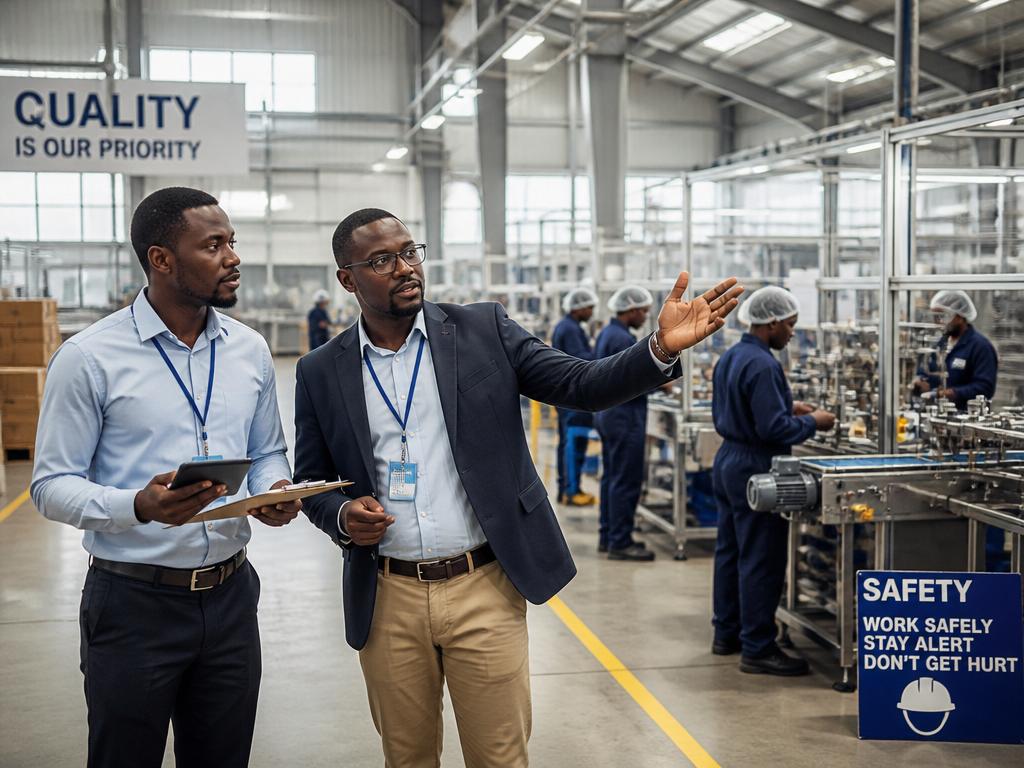
Selecting an international supplier should never be based on price alone. A factory inspection helps buyers evaluate whether a supplier is suitable before placing significant orders or entering long-term cooperation.
We verify African suppliers on the ground — legal identity, ownership, capacity and site visits — before you transfer any money. supplier verification in Africa.
Looking Beyond the Quotation
Selecting an international supplier should never be based on price alone.
A factory may offer attractive pricing, fast delivery and professional communication, but this does not always confirm that it has the operational capacity, quality systems or export experience required to deliver consistently.
A factory inspection, sometimes referred to as a factory audit or supplier assessment, helps international buyers evaluate whether a supplier is suitable before placing significant orders or entering long-term cooperation.
The objective is not only to identify problems. It is also to understand how the business operates, how production is managed and whether the supplier is a good fit for the buyer’s requirements.
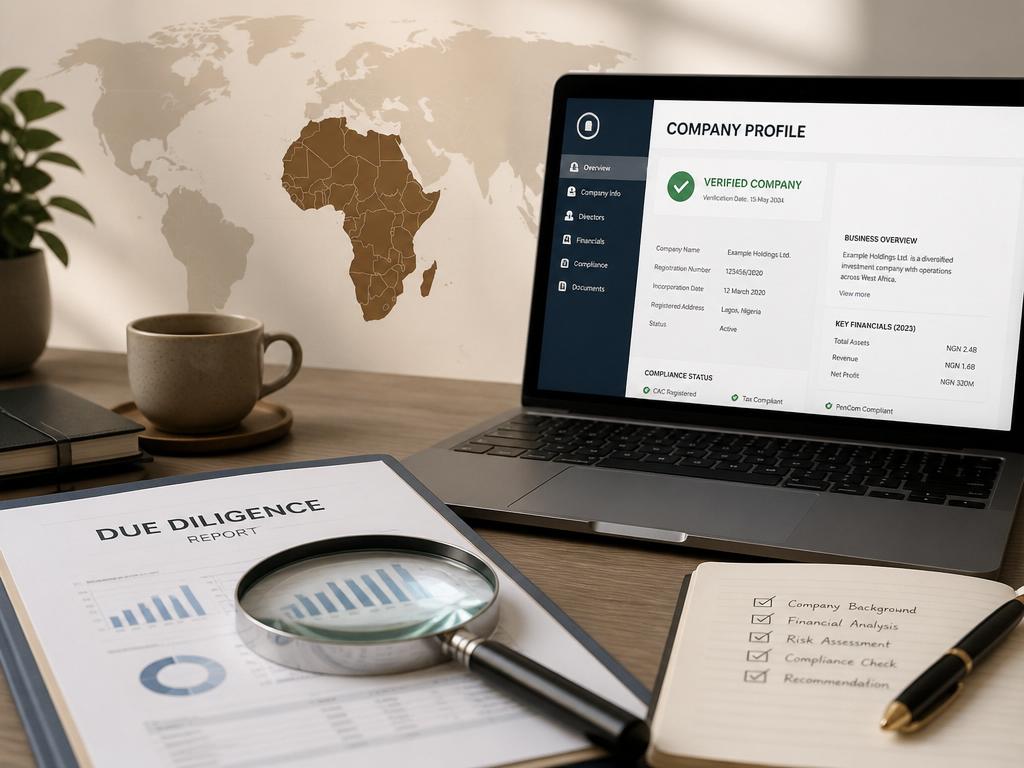
This article deals only with what can be established physically, at the site, by someone standing in it. Registry checks, ownership, sanctions screening, certificate validation and banking verification happen before anyone travels.
For those desk-based stages, and for how a site visit fits into the wider process, see our guide to verifying an African supplier end to end.
Factory Inspection vs Product Inspection
It is important to distinguish between a factory inspection and a product inspection.
A factory inspection evaluates the supplier’s business premises, production capacity, quality systems, documentation, management and general operational capability.
A product inspection, such as a pre-shipment inspection, focuses on a specific order and checks whether finished or nearly finished goods match agreed specifications before shipment.
Both can be valuable, but they serve different purposes.
"A factory inspection answers the question: Can this supplier reliably produce and deliver?"
"A product inspection answers the question: Does this specific shipment meet our requirements?"
Why Factory Inspections Matter
International buyers often operate far from the supplier’s facilities.
Distance makes it difficult to confirm what is actually happening on the ground.
A factory inspection can help verify:
- Whether the factory exists.
- Whether production is active.
- Whether the supplier has suitable equipment.
- Whether management appears professional.
- Whether quality controls are in place.
- Whether the supplier can meet expected volumes.
- Whether documentation is organised.
- Whether there are obvious operational risks.
For larger transactions, an inspection before committing funds can be a practical risk-reduction step.
What Should Be Checked?
A factory inspection should be adapted to the industry, product and transaction size.
However, most professional inspections include several common areas.
1. Legal and Business Identity
The first task on arrival is not production. It is confirming that the site you are standing in belongs to the company you have been negotiating with.
Observe and record at the gate and in the office:
- Signage, gate name and any registration plate on the premises, compared with the entity named on the quotation.
- Whether the address on the ground matches the address on the company documents — in practice, whether the coordinates and the paperwork agree.
- Who is present in management, and whether the person you have been emailing actually works here.
- Whether documents on the wall or in the office name the same entity as your quotation, or a different one.
- Who owns the site: the supplier, a landlord, a cooperative, or another producer that also serves competing buyers.
This matters most when your counterparty is a broker, exporter or agent. A visit to a real factory proves the factory is real; it does not prove your counterparty controls its output. Establish that relationship explicitly while on site.
2. Physical Facilities
The inspection should confirm whether the site is suitable for the type of products being offered.
Areas to observe include:
- Factory buildings.
- Production areas.
- Storage areas.
- Loading areas.
- Office facilities.
- General organisation.
- Cleanliness and maintenance.
- Security and access control.
A well-organised site does not guarantee perfect performance, but it often indicates better operational discipline.
3. Production Capacity
One of the most important questions is whether the supplier can realistically deliver the required volumes.
An inspection may review:
- Number of production lines.
- Machinery and equipment.
- Workforce size.
- Production schedules.
- Existing orders.
- Bottlenecks.
- Maintenance routines.
- Ability to scale production.
Buyers should be cautious when promised volumes appear inconsistent with visible capacity.
4. Quality Management
Quality is rarely created at the end of production. It is usually the result of systems, routines and controls throughout the process.
A factory inspection should review how the supplier manages:
- Incoming materials.
- In-process checks.
- Final inspection.
- Non-conforming products.
- Traceability.
- Documentation.
- Corrective actions.
- Customer complaints.
The International Trade Centre’s export quality management work highlights the importance of quality systems, standards, food safety and technical requirements for companies accessing international markets.
5. Documentation and Records
Reliable suppliers normally maintain organised records.
Relevant documents may include:
- Production records.
- Quality control records.
- Inspection reports.
- Raw material records.
- Supplier records.
- Maintenance logs.
- Export documentation.
- Certificates where applicable.
Poor documentation does not always mean the supplier is unreliable, but it increases uncertainty.
6. Product Handling and Storage
Product quality can be affected by poor handling, storage or packaging.
The inspection should consider:
- Storage conditions.
- Protection from moisture, heat or contamination.
- Separation of finished goods and raw materials.
- Packaging routines.
- Labelling.
- Loading procedures.
- Inventory organisation.
This is particularly important for agricultural products, food products, seafood, chemicals and products sensitive to humidity or temperature.
7. Export Experience
A factory that sells domestically may not automatically be ready for international trade.
Buyers should ask:
- Has the supplier exported before?
- To which markets?
- Which documents can they provide?
- Do they understand international packaging requirements?
- Have they worked with freight forwarders?
- Are they familiar with buyer inspections?
- Can they meet destination-market requirements?
Export readiness is often just as important as production capacity.
8. Management and Communication
A site visit is also an opportunity to evaluate management.
Consider:
- Are managers transparent?
- Do they answer questions clearly?
- Are they willing to show the facility?
- Do they understand the buyer’s requirements?
- Do they provide consistent information?
- Are they realistic about capacity and timelines?
Professional communication during an inspection often reflects how the supplier may behave during the business relationship.
9. Health, Safety and Working Conditions
Depending on the industry, buyers may need to evaluate health, safety and working conditions.
This may include observing:
- Protective equipment.
- Fire safety.
- Emergency exits.
- Machinery safety.
- Workplace organisation.
- General working conditions.
- Environmental handling.
For some buyers, social compliance and environmental requirements may require a separate specialised audit.
10. Photographic and Documentary Evidence
An inspection that produces only a written opinion is difficult to act on. The record should allow someone who was not present to reach their own conclusion.
- Exterior of the premises, including signage and the entrance.
- Production areas with machinery visibly in operation, not idle lines only.
- Storage and finished-goods areas, with an indication of scale.
- Packaging, labelling and loading areas.
- Quality-control station and any records in use.
- Date and, where permitted, location metadata retained on the images.
- Copies or photographs of on-site documents: production records, QC logs, previous export paperwork.
Ask permission before photographing, and record any refusal. A supplier declining to photograph one clearly defined area is not unusual; a general refusal to document anything is itself a finding.
11. Discrepancies Between Claims and Observations
The most valuable output of a site visit is rarely a single defect. It is the list of points where what was claimed in writing does not match what is visible on site.
Compare each claim against the observation directly:
- Claimed monthly volume against the number of working lines, workforce present and storage available.
- Claimed ownership of the facility against who actually controls the gate, the equipment and the staff.
- Claimed certification scope against the site, product and process observed.
- Claimed export experience against export documents physically available on site.
- Claimed quality procedures against records being filled in during production, not reconstructed afterwards.
- Claimed stock on hand against inventory that is present, labelled and identifiable as the supplier’s own.
Record each gap, its size and the explanation given. Some discrepancies are ordinary imprecision. A pattern of favourable overstatement across several independent claims is a different signal, and it should change the commercial terms rather than merely be noted.
12. Corrective Actions
A factory inspection does not need to result in a simple “pass” or “fail”.
Often, the most useful outcome is a list of findings and corrective actions.
Examples include:
- Improve labelling.
- Separate raw materials from finished goods.
- Improve documentation.
- Clarify production schedules.
- Add final quality checks.
- Improve packaging.
- Provide missing certificates.
A supplier willing to improve can sometimes become a strong long-term partner.
Factory Inspection Is Not a Guarantee
A factory inspection reduces risk, but it does not eliminate risk.
It is a snapshot of a supplier at a specific point in time.
The buyer should still use:
- Written contracts.
- Clear specifications.
- Appropriate payment terms.
- Product inspections.
- Documentation checks.
- Ongoing supplier monitoring.
Factory inspection should be seen as one part of a broader supplier verification process.
Practical Checklist for Buyers
Before accepting a supplier, consider:
- Has the factory been physically verified?
- Is the supplier legally connected to the production site?
- Does visible capacity match promised volumes?
- Are quality controls documented?
- Are storage and handling conditions appropriate?
- Does the supplier have export experience?
- Are management and communication professional?
- Are risks clearly documented?
- Are corrective actions needed before placing an order?
Final Thoughts
Factory inspections are one of the most practical tools available to international buyers.
They help companies move beyond promises, brochures and video calls by providing a clearer picture of how a supplier actually operates.
For Scandinavian companies exploring African supply chains, a properly conducted inspection can improve decision-making, reduce avoidable risk and support stronger long-term business relationships.
The goal is not to find a perfect supplier.
The goal is to understand the supplier well enough to make an informed commercial decision.
If the site visit confirms the supplier, the work shifts to specifications, delivery performance and follow-up — covered in managing African suppliers over the long term.
Frequently asked questions
Supplier verification
We verify African suppliers on the ground — legal identity, ownership, capacity and site visits — before you transfer any money.
supplier verification in AfricaNeed independent verification on the ground?
Our team visits the facility, photographs what is there, compares it against what you have been told and reports the discrepancies — before you place the order.